
In the landscape of technological innovation, two areas stand at the front of human effectiveness: Quantum Processing and Artificial Brains (AI). Individually, they have revolutionized industries and expanded the limits of what’s possible Quantum AI. However, when combined, they form a synergy that promises to reshape the very fabric in our reality. Welcome to the realm of Quantum AI.
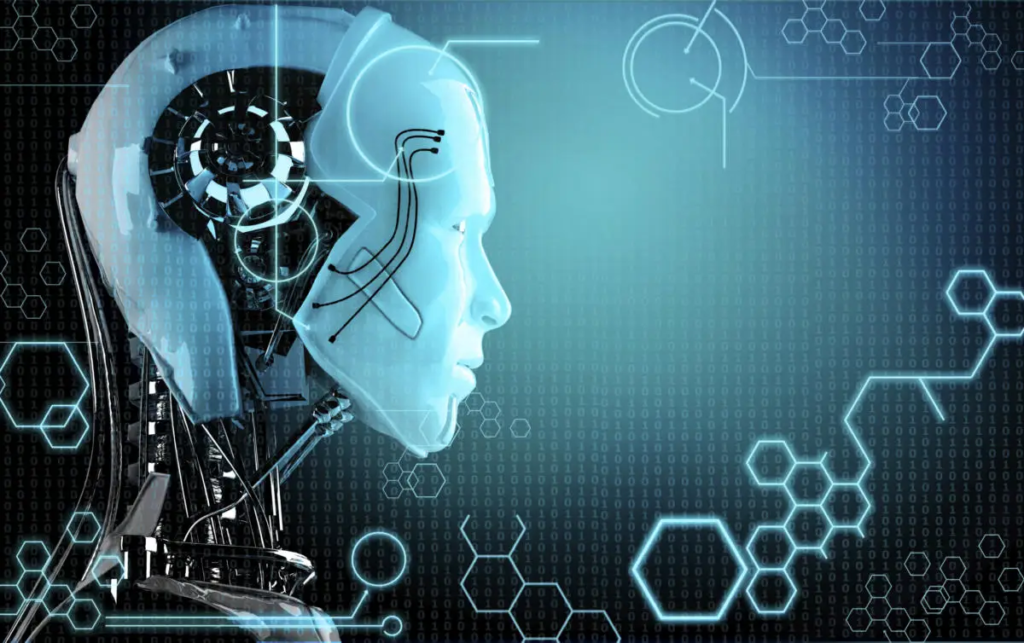
The Marriage of Minds: Understanding Quantum AI
Quantum AI represents the blend of quantum computing’s computational power with the brains and learning capabilities of artificial brains systems. It utilizes the principles of quantum movement to enhance the speed and efficiency of AI algorithms, opening doors to freakish advancements in several fields.
At its core, Quantum AI harnesses the unique properties of quantum bits or qubits, which can exist in multiple states simultaneously, unlike time-honored bits, which can only be in one state at a time. This inherent parallelism enables quantum computers to perform complex computations exponentially faster than their time-honored counterparts, making them ideal for handling the immense amounts of data involved in AI tasks.
Unleashing Quantum Supremacy in AI
One of the most promising applications of Quantum AI lies in optimization problems, where traditional AI algorithms often struggle due to the sheer intricacy of the computations involved. Quantum computers shine in tackling such problems by exploring multiple solutions simultaneously and identifying the most optimal one in a fraction of that time period it would take time-honored computers.
Moreover, Quantum AI holds the potential to revolutionize machine learning algorithms. Quantum nerve organs networks, for instance, could leverage quantum entanglement and superposition to enhance learning capabilities and achieve higher numbers of accuracy, even with limited training data.
Breaking Barriers: Quantum AI doing his thing
The ramifications of Quantum AI extend across various areas, from healthcare and finance to cybersecurity and materials science. In drug discovery, for example, Quantum AI can accelerate the process of simulating molecular connections, leading to the development of novel therapeutics with greater precision and efficiency.
In finance, Quantum AI algorithms can analyze vast datasets in real-time to detect deceptive activities, improve investment portfolios, and predict market trends with unrivaled accuracy, empowering financial institutions to make informed decisions swiftly.
Furthermore, Quantum AI has the potential to revolutionize cryptography by developing quantum-resistant encryption techniques that can withstand the computational power of quantum computers, thus ensuring the security of sensitive information in an increasingly digitized world.
Navigating Challenges on the Quantum Frontier
Despite its immense potential, Quantum AI faces several challenges that must be addressed for widespread adopting. Chief among these challenges are hardware limitations, as current quantum computers are inclined to errors and require sophisticated error-correction techniques to maintain reliability.
Moreover, the development of quantum algorithms optimized for specific AI tasks remains a regular area of research, requiring interdisciplinary collaboration between quantum physicists, computer scientists, and AI experts.
The street Ahead: Toward Quantum-Powered Brains
As research and development in Quantum AI continue to progress, we stand at the brink of a new era in computing—one where the limits of what we can do are limited only by our imagination Cost of quantum AI trading software in Canada. From revolutionizing healthcare and finance to shielding digital privacy and advancing scientific discovery, the number of choices are boundless.